 Solitaire
Types of solitaire games
They all shuffle the same 52 cards, and no two feel alike. This is what actually changes from one solitaire to the next — the deck, the goal, the move you are allowed to make — so you can pick the one you will enjoy.
Every solitaire on this page uses the same 52 cards — or 104 in Spider's case — and each one changes a single thing: what you are building, where you may build it, or how many cards you can carry at once. That is why learning a second solitaire takes ten minutes and a third takes five.
| Game | Deck | Goal | Difficulty | Rules |
|---|---|---|---|---|
| Klondike | One deck (52 cards) | Seven columns, four foundations and a stock you turn over. Build the foundations from Ace to King and you win. | Easy to learn · hard to master | Rules |
| Spider | Two decks (104 cards) | Build descending runs inside the tableau. Complete a run from King to Ace and it leaves the table. Clear eight and you win. | Medium (1 suit) · very hard (4 suits) | Rules |
| FreeCell | One deck (52 cards) | Every card is face up from the first second. Four free cells let you park cards while you dig. Almost every deal can be solved by thinking. | Pure skill | Rules |
| Pyramid | One deck (52 cards) | Twenty-eight cards in a pyramid. Remove them in pairs that total 13 until nothing is left standing. | Easy rules · tight margins | Rules |
| TriPeaks | One deck (52 cards) | Three peaks of cards. Take any uncovered card one rank above or below the one in your hand, and keep going. | Fast and streaky | Rules |
| Golf | One deck (52 cards) | Clear the columns onto a single pile by taking cards one rank above or below the top card. | Simple · ideal for one-handed play | Rules |
| Yukon | One deck (52 cards) | Every card is dealt to the columns. You can move any face-up card — with whatever sits on top of it — onto a card of the opposite colour, one rank higher. | Deep · rewards planning | Rules |
| Scorpion | One deck (52 cards) | Move any face-up card, and everything above it, onto the next card up in the same suit. Build four King-to-Ace runs. | Hard · one mistake decides it | Rules |
Which one should you play?
- You have five minutes: Golf or TriPeaks.
- You want to think, not to be lucky: FreeCell.
- You want the classic: Klondike.
- You want a long, absorbing game: Spider, two or four suits.
- You want arithmetic instead of architecture: Pyramid.
- You want Klondike to fight back: Yukon, then Scorpion.
The three families
Hundreds of solitaires exist, but almost all of them belong to one of three families, and this collection covers all three.
- Builders. You order cards into sequences: Klondike, FreeCell, Spider, Yukon, Scorpion. The skill is managing space.
- Matchers. You remove cards in pairs or chains: Pyramid, TriPeaks, Golf. The skill is choosing the order of removals.
- Packers. You pack everything onto foundations with no tableau to help you — the oldest and most brutal designs, and the reason the family is also called patience.
Klondike
The one everyone means by “solitaire”
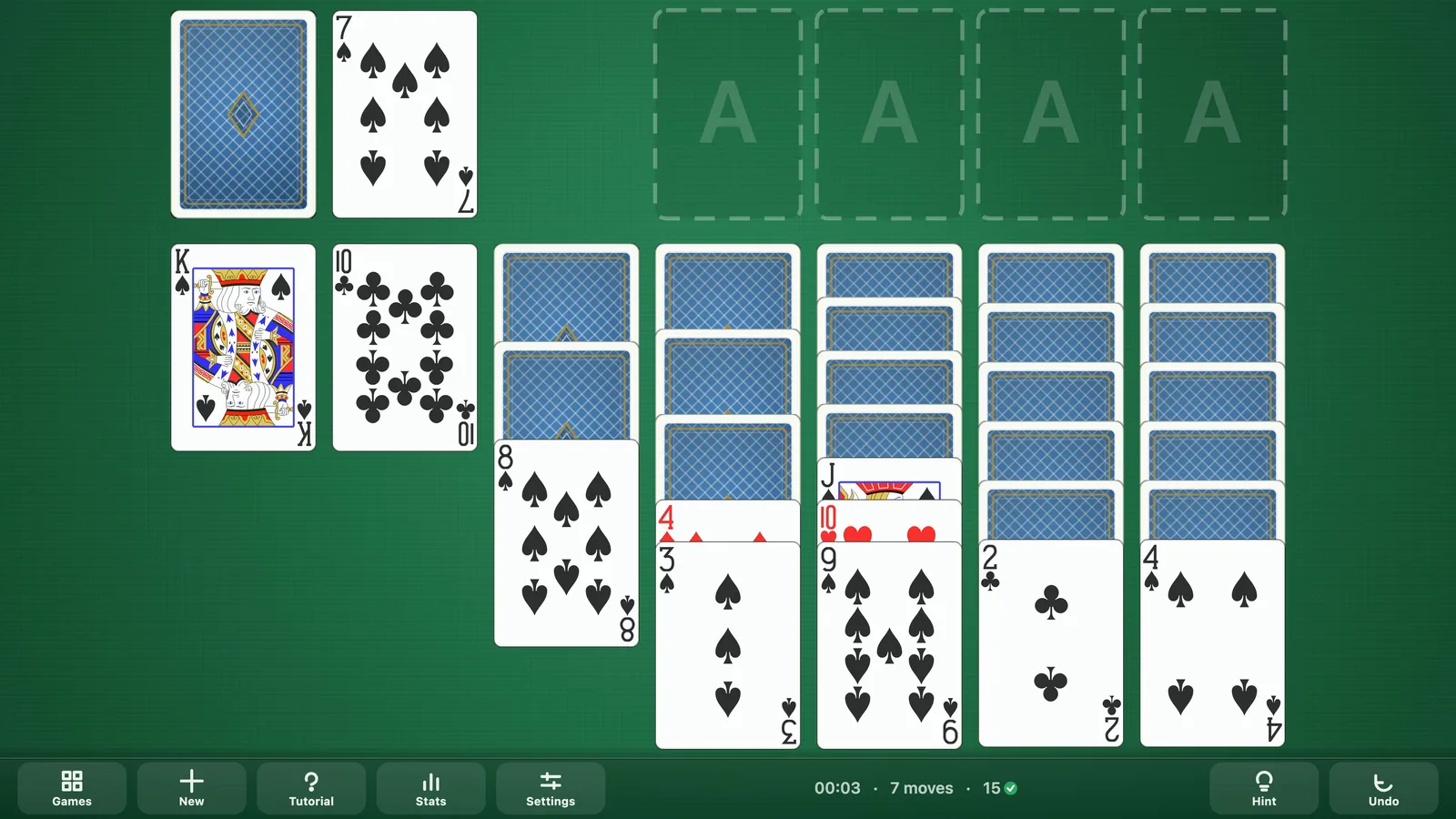
Seven columns, four foundations and a stock you turn over. Build the foundations from Ace to King and you win.
Rules and how to play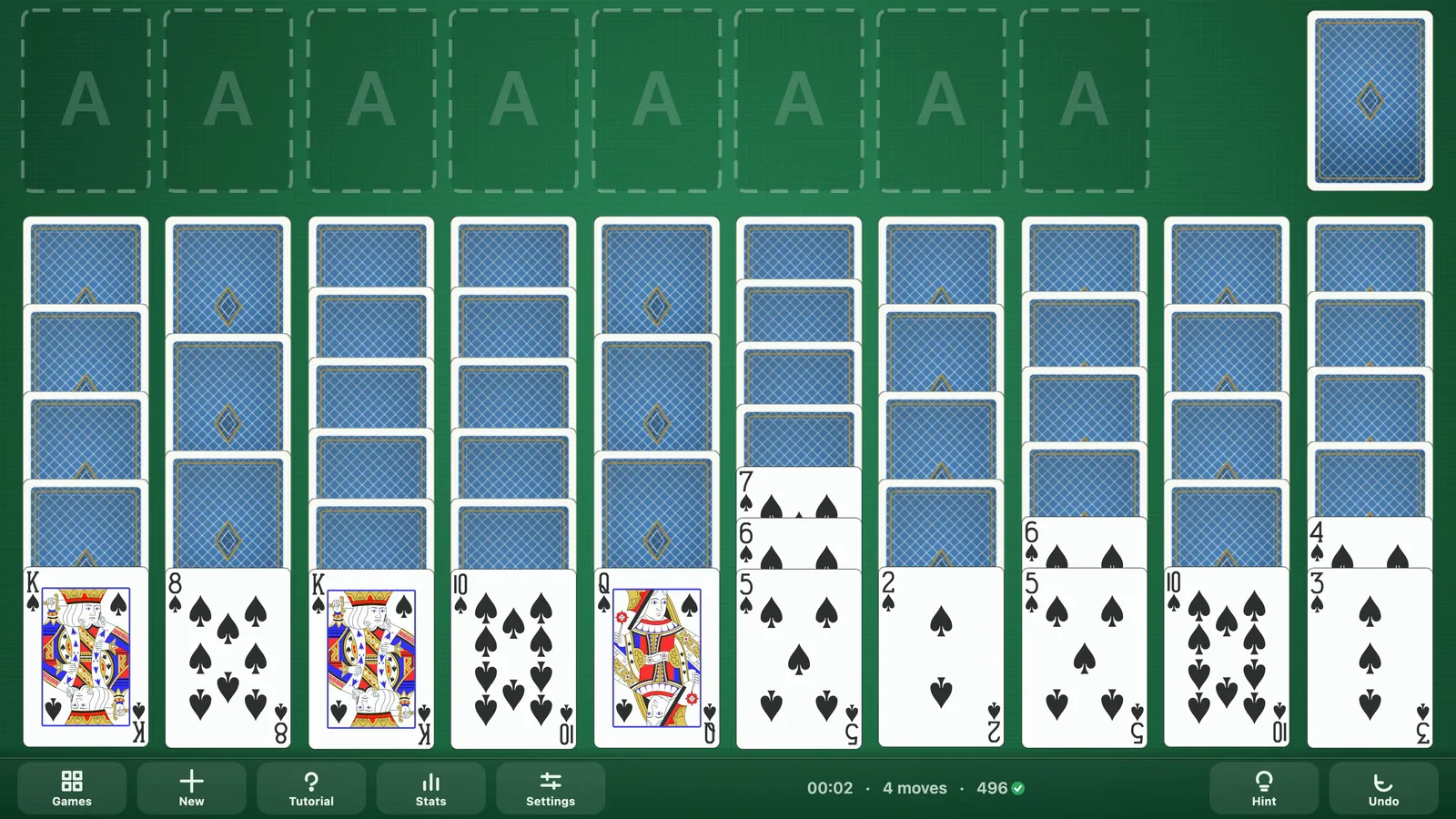
Spider
Ten columns, two decks, one long plan
Build descending runs inside the tableau. Complete a run from King to Ace and it leaves the table. Clear eight and you win.
Rules and how to play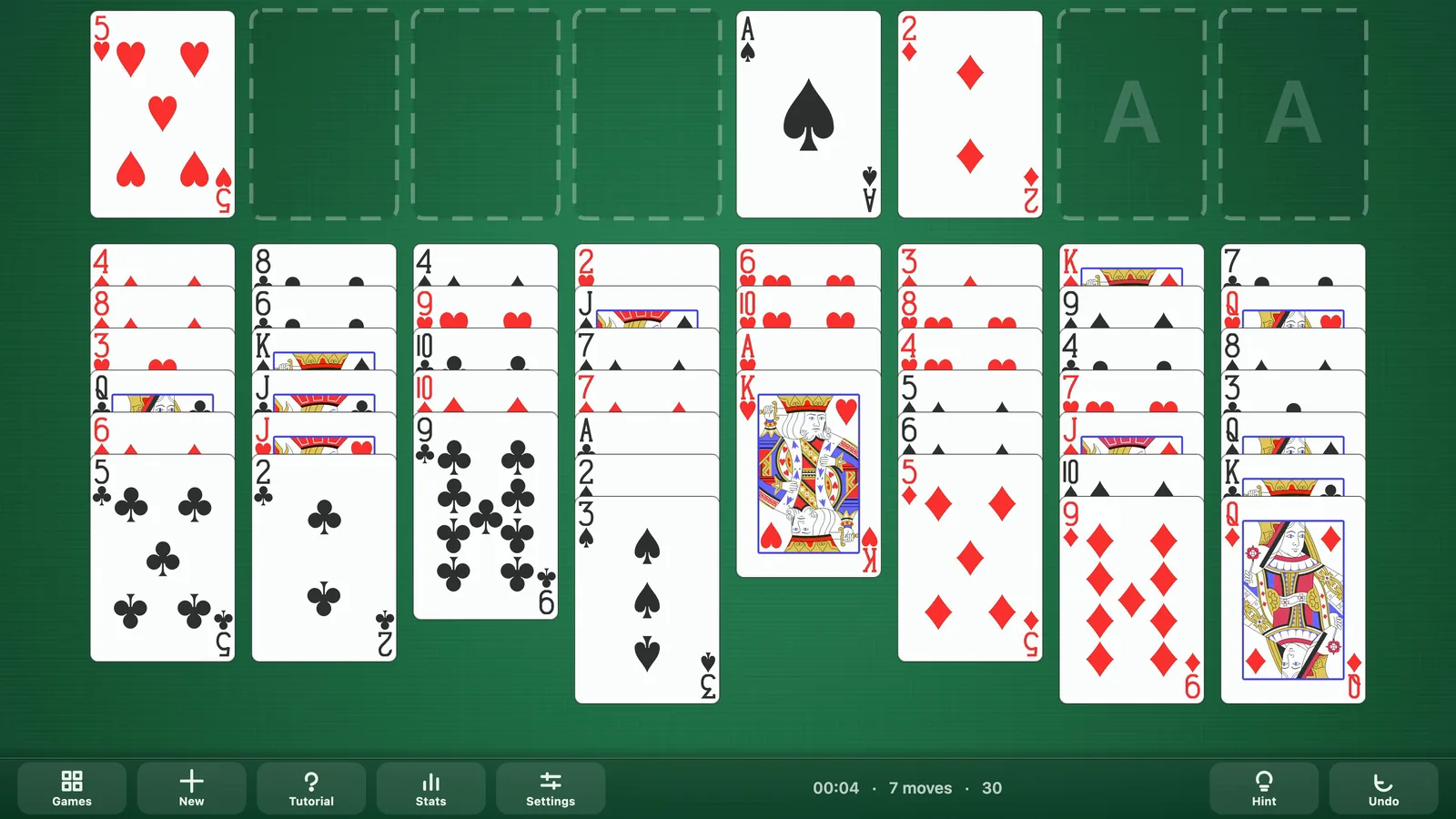
FreeCell
No luck. Everything is on the table
Every card is face up from the first second. Four free cells let you park cards while you dig. Almost every deal can be solved by thinking.
Rules and how to play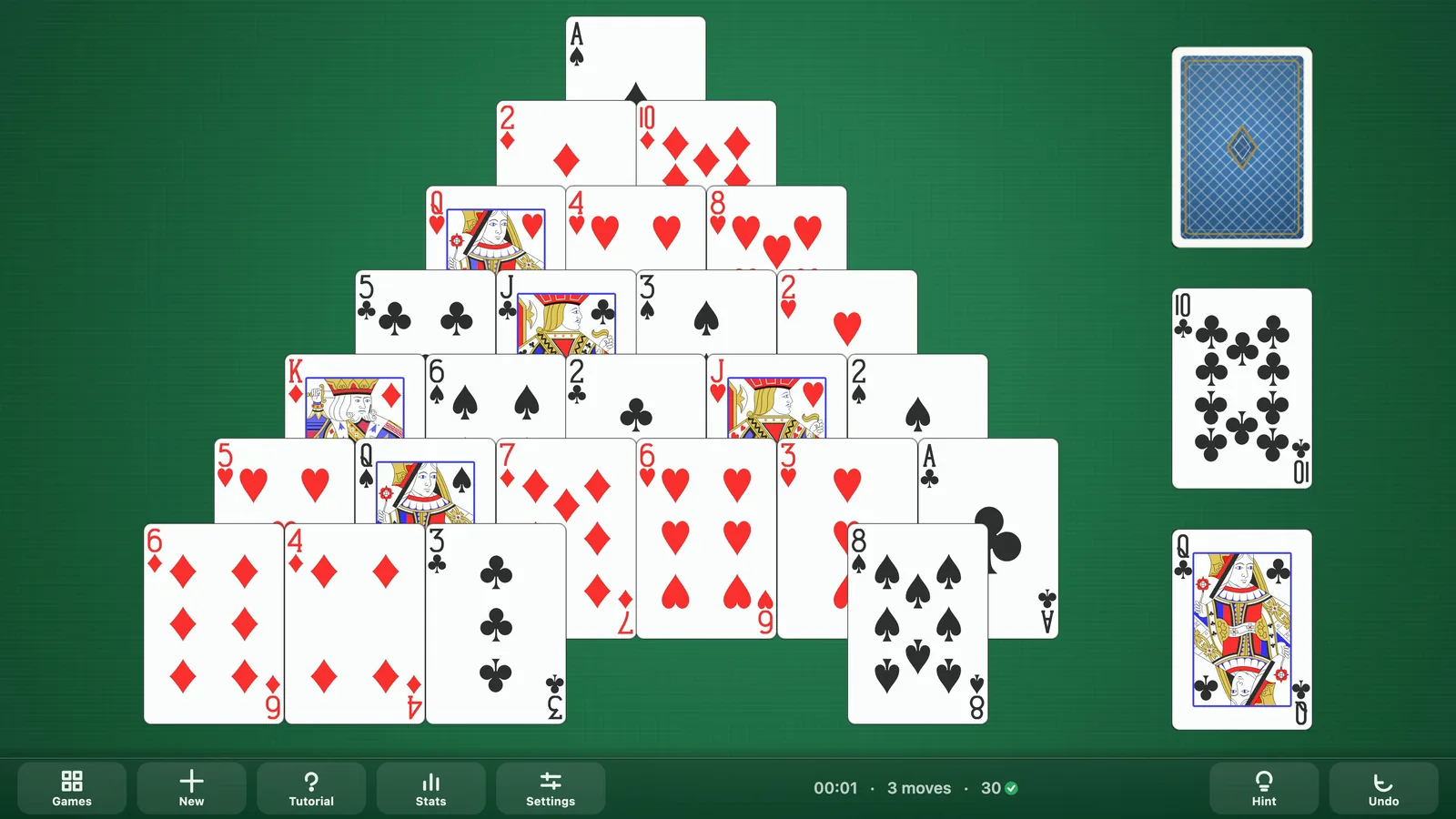
Pyramid
Every pair adds up to thirteen
Twenty-eight cards in a pyramid. Remove them in pairs that total 13 until nothing is left standing.
Rules and how to play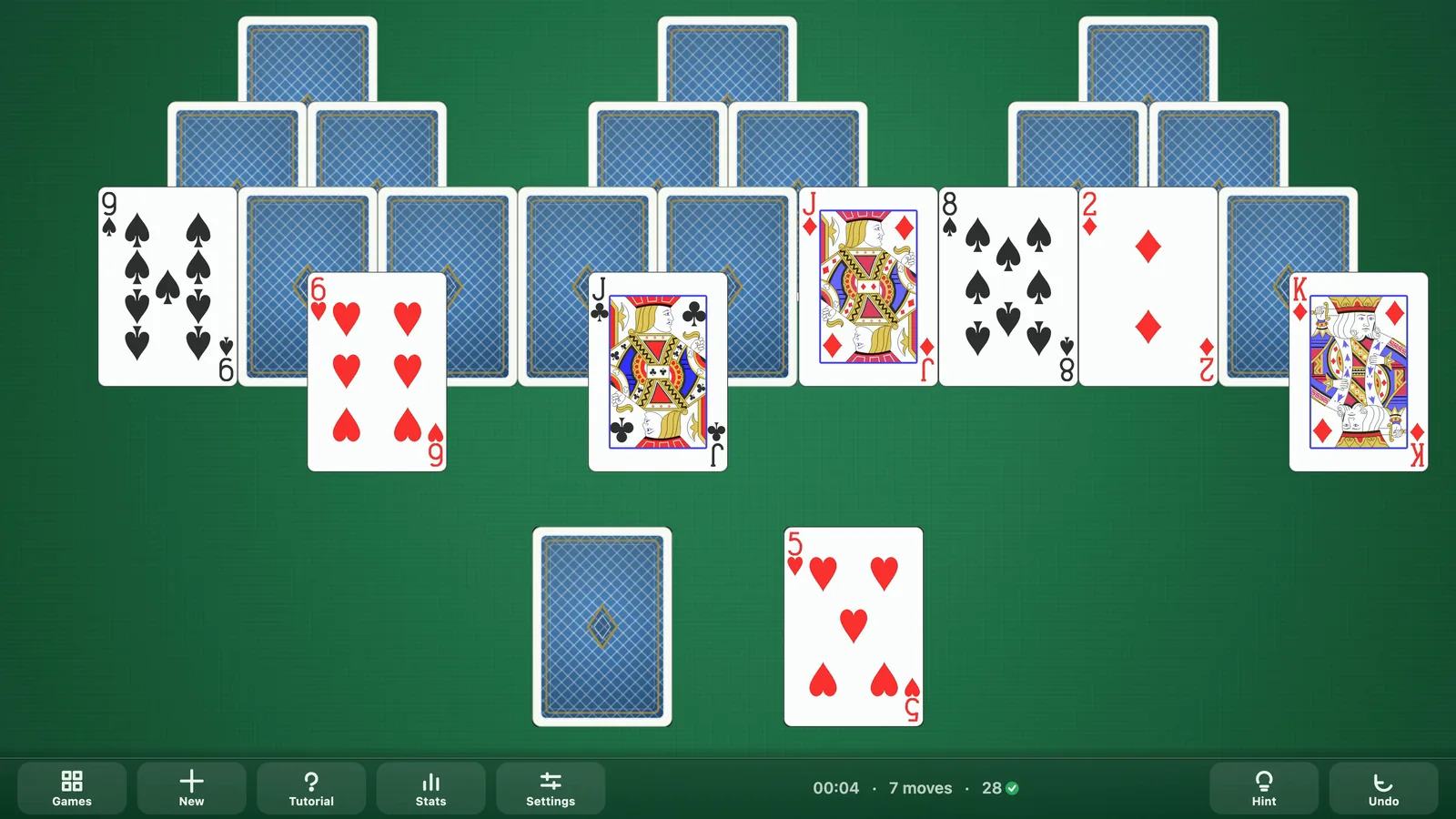
TriPeaks
One up or one down, and keep the chain alive
Three peaks of cards. Take any uncovered card one rank above or below the one in your hand, and keep going.
Rules and how to play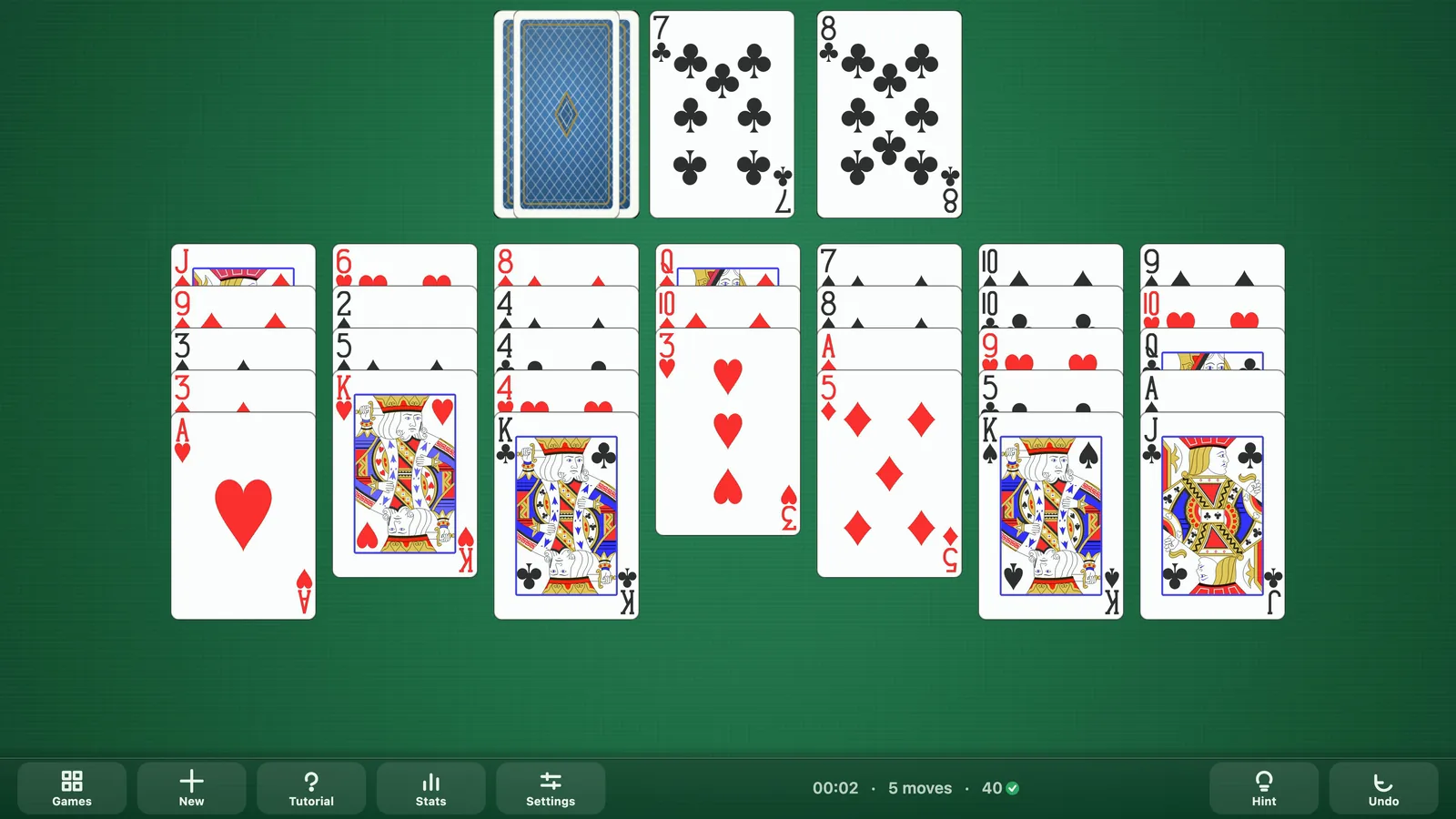
Golf
Seven columns, one pile, one simple move
Clear the columns onto a single pile by taking cards one rank above or below the top card.
Rules and how to play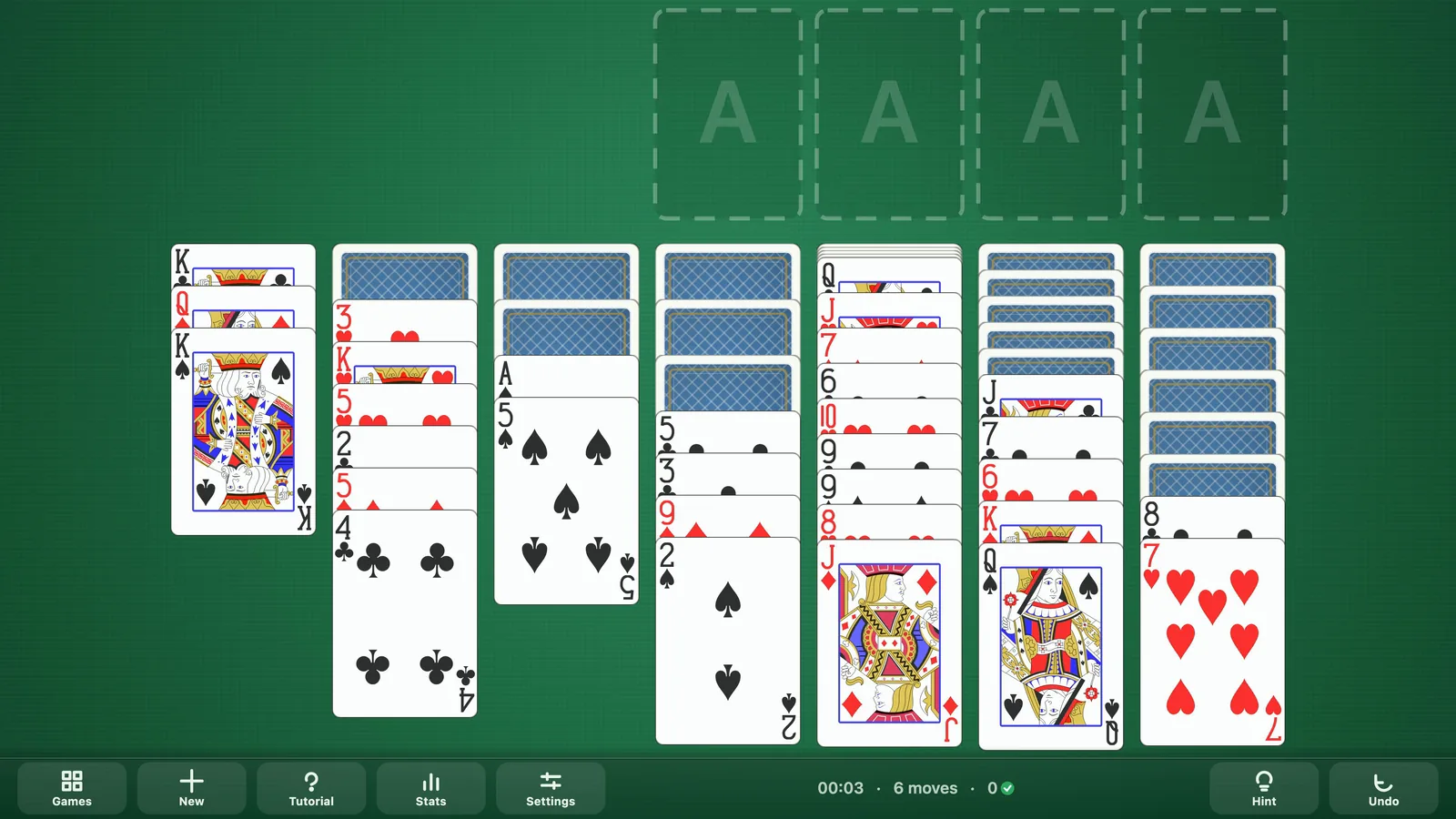
Yukon
Klondike with no stock and no excuses
Every card is dealt to the columns. You can move any face-up card — with whatever sits on top of it — onto a card of the opposite colour, one rank higher.
Rules and how to play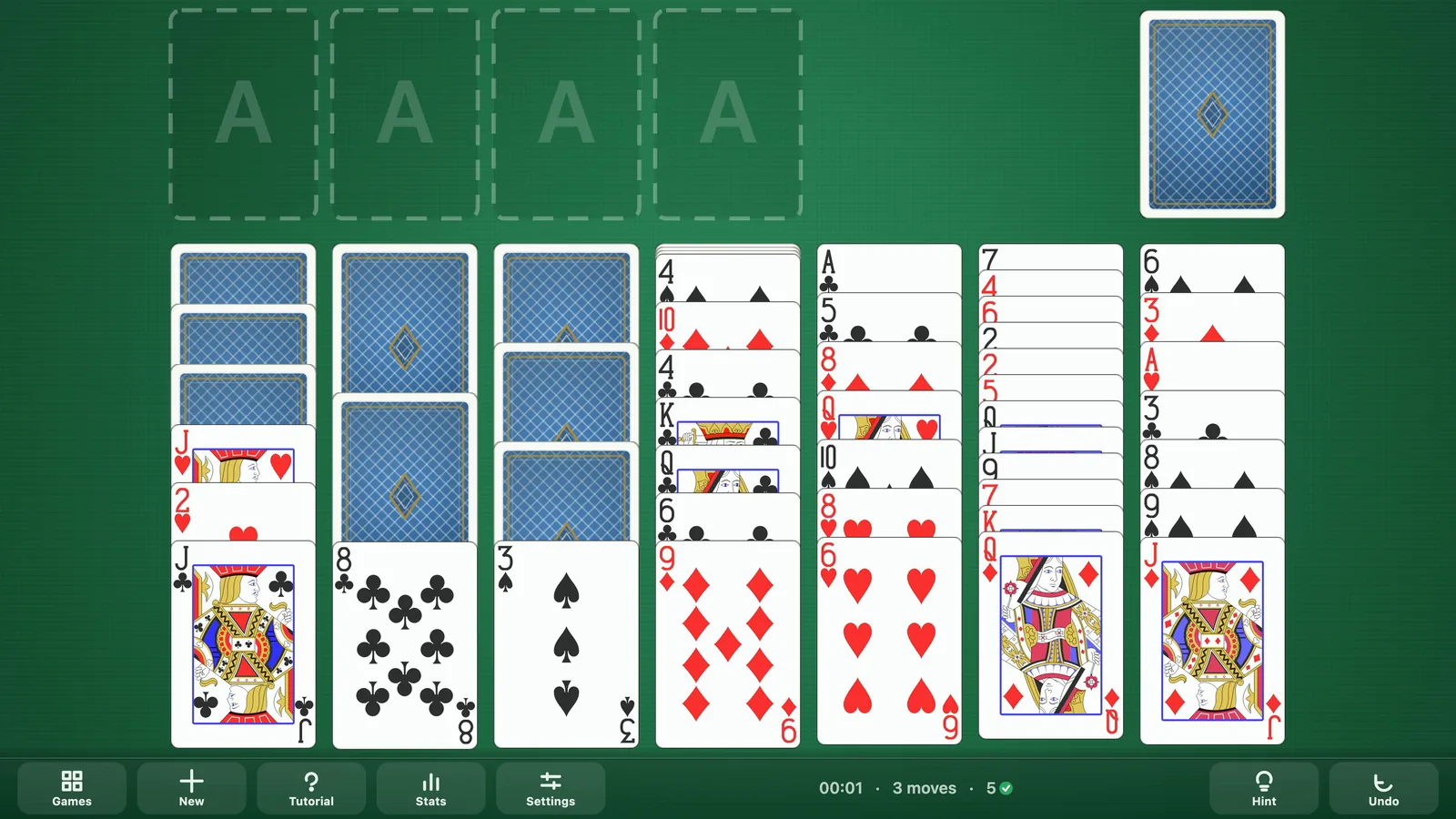
Scorpion
The Spider’s cousin, with a sting
Move any face-up card, and everything above it, onto the next card up in the same suit. Build four King-to-Ace runs.
Rules and how to playFourteen more worth knowing
Real games with fixed rules, explained from the deal up. They are not in the app — these pages are for playing with a real pack.
Frequently asked questions
How many types of solitaire are there?
Hundreds have been documented — card-game catalogues list over 500 named patience games. A handful account for almost all play: Klondike, Spider, FreeCell, Pyramid, TriPeaks, Golf, Yukon and Scorpion, which are the eight in this collection.
What is the easiest solitaire game?
Golf and one-suit Spider are the gentlest to learn. FreeCell is the easiest to win consistently once you know it, because nothing is hidden.
What is the hardest solitaire?
Four-suit Spider and Scorpion. Both let you build runs that cannot be moved later, so an early mistake stays on the table for the rest of the game.
Which solitaire is best for a phone?
Golf and TriPeaks: one tap per move, and a game lasts a couple of minutes. Klondike and FreeCell work well with large cards turned on.
Eight solitaires. Free. No account.
Android, iPhone and iPad, or straight in your browser.
- Free
- No account
- Plays offline